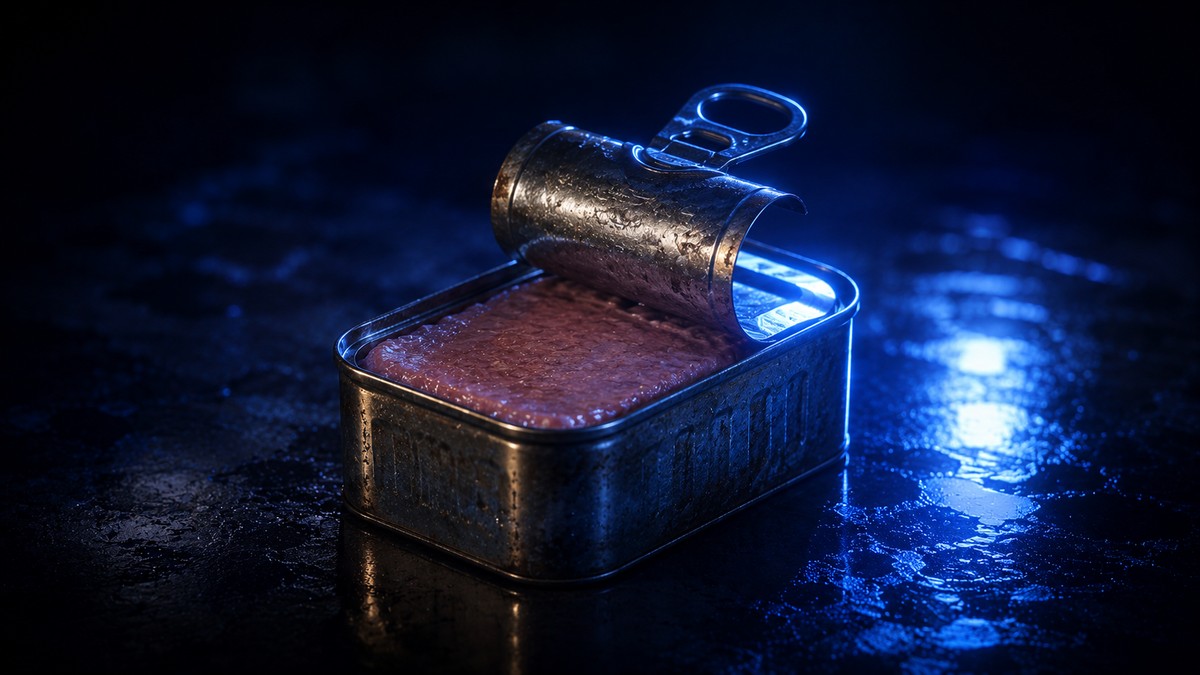
You know spam when you see it. The junk piling up in your inbox, the messages nobody asked for, the noise you scroll past to find the one email that actually matters. But have you ever wondered why we call it spam? The answer is strange and a lot funnier than you might expect.
It comes from a comedy sketch. Specifically, a nineteen seventy Monty Python sketch, set in a cafe where almost every dish on the menu came with Spam, the canned meat. That is the real root of the word we now use for every unwanted message that clutters your day.
The sketch that started it
Picture the scene. A cafe, a menu, and nearly every single dish comes served with Spam. Eggs and Spam. Bacon and Spam. Spam and more Spam. The word just keeps piling up on the menu until it starts to feel absurd, which is of course the whole point.
Then it gets louder. In the corner sits a group of Vikings, and they just keep singing the word Spam. Over and over, louder and louder, until it drowns out every real conversation in the room. Nobody can talk. Nobody can be heard. There is just this one word, repeated endlessly, burying everything else that anyone is trying to say.
It is a perfect little picture of something useless multiplying until it takes over. And that image turned out to be weirdly prophetic once the internet came along.
From a cafe to your inbox
Fast forward to the early days of the internet. Users started noticing the exact same thing happening online. Useless messages were flooding in and burying the real ones. The signal was getting lost under a rising tide of noise, message after message that nobody wanted, drowning out the conversations that actually mattered.
If you had that Monty Python sketch in your head, the connection was obvious. It was the Vikings all over again, just digital. So early internet users borrowed the name. They looked at their swamped inboxes and message boards and called it spam, because that is exactly what it felt like. One word, repeated endlessly, drowning out everything else.
That is the whole origin. Unwanted email is spam because it does the same thing the sketch did. It drowns out everything that actually matters.
Why the name fits so well
What makes the word stick is how accurately it describes the feeling. Spam is not just annoying because there is a lot of it. It is annoying because it competes for your attention with the stuff you actually care about. Every junk message is one more voice in the corner, singing over the conversation you are trying to have.
That is why the name has lasted. It captures the real problem, which is not the individual message but the flood. One unwanted email is a nuisance. A thousand of them is a wall of noise between you and the things that matter. The Vikings understood this decades before anyone had an inbox. What started as a throwaway comedy bit became the most fitting name imaginable for a problem that would not exist for another twenty years. That is a rare kind of accuracy, and it is why the word never had any real competition once it caught on.
We think about noise like this a lot at Built by Buit. We make practical apps and AI tools, and a big part of good work is cutting through the clutter so the thing that matters actually gets through, whether that is a message, a task, or a workflow. Spam is the perfect cautionary tale. It is what happens when the noise wins. So the next time your inbox fills up with junk, you can thank a group of singing Vikings from nineteen seventy for giving that mess its perfect, permanent name.
Prefer to watch?
Built by Buit builds practical apps and AI tools for businesses across South Florida. See what we make, or start a project.
Leave a Reply