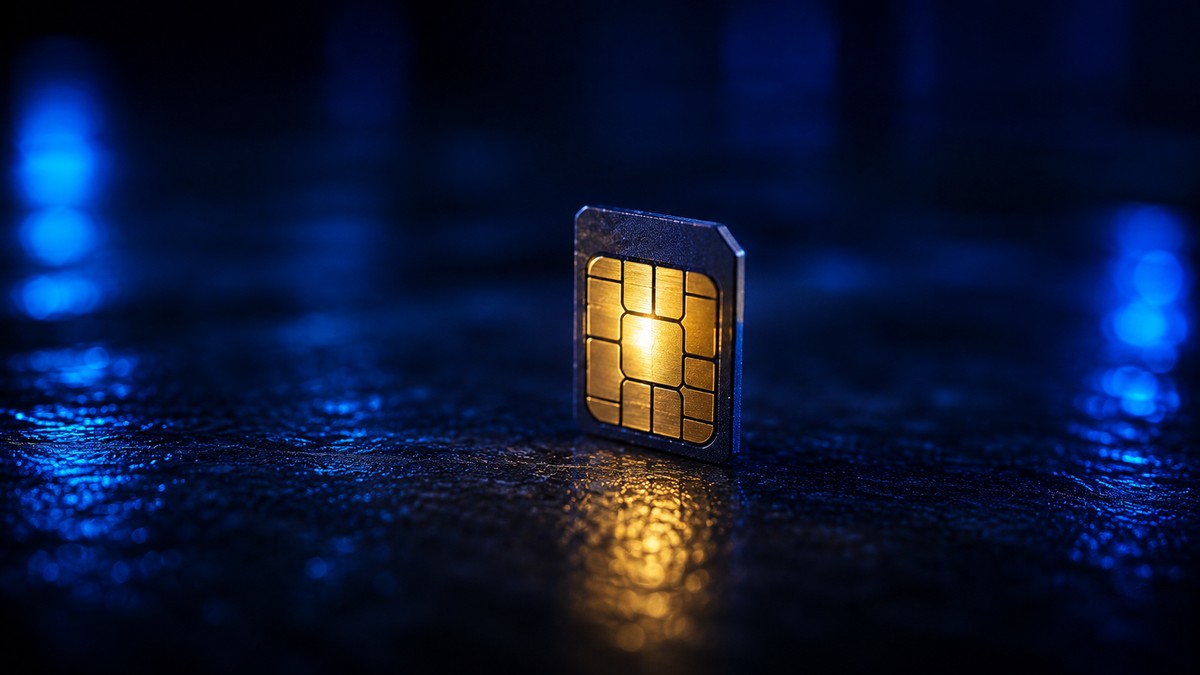
There is a tiny chip in your phone that you almost never think about. You probably slotted it in once, years ago, and forgot it existed. But that little card is doing something surprisingly important every second your phone is on. It is telling the network who you are.
It is called a SIM card, and most people have no idea what those letters stand for. SIM means Subscriber Identity Module. Break that phrase apart and you get a pretty clear picture of the job it quietly does.
Your identity, shrunk down to a chip
Strip away the jargon and a SIM card is basically your identity as far as the phone network is concerned. It holds a secret number that says, in effect, this device belongs to this account, with this phone number. When your phone reaches out to a cell tower, that little chip is the thing vouching for you, proving you are a real subscriber the network already knows.
That is the “Subscriber Identity” part in action. You subscribed to a plan, and the module is the physical proof of that relationship. Without it, your phone is just a very expensive slab of glass and metal that can reach an emergency line and not much else. The SIM is what turns anonymous hardware into your phone.
Why you can swap phones and keep your number
Here is where the design gets genuinely clever, and where it shows up in real life. Because your identity lives on that removable card and not baked into the phone itself, you can pop a SIM out of an old phone, drop it into a new one, and almost instantly your number and plan just work. No calling your carrier, no re-registering, no ceremony.
That separation is worth appreciating. The phone is just hardware. It is a screen, a battery, some cameras. The SIM is the part that is actually you, at least in the eyes of the network. Move the “you” to a different body and the network does not care which body it is. It only cares about the identity the module carries.
It is also why losing a phone is a headache but not a catastrophe. The device is gone, but the identity it carried can be reissued onto a fresh card, and your number lands back in your hands. The account was never really tied to that specific slab of glass. It was tied to the module, and the module can be replaced.
It is a small idea with a big payoff. The thing that makes you findable, callable, and billable is intentionally kept separate from the device, so upgrading or replacing your phone never means losing your identity along with it.
The eSIM keeps the same job, minus the plastic
Newer phones are moving to something called an eSIM, which is essentially the same module built right into the phone instead of living on a little card you can hold. The “e” is for embedded. Instead of physically sliding a chip in, you activate your identity through software.
Do not let the change fool you, though. The job is exactly the same. An eSIM still stores that secret identity, still tells the network which account and number belong to that device, still proves you are a real subscriber. The plastic is disappearing, but the Subscriber Identity Module is very much alive. It just went invisible.
We find this kind of thing fascinating when we build software, because so much of good technology comes down to handling identity cleanly. Knowing who someone is, keeping that separate from the device they happen to be holding, and making the whole thing feel effortless to the person using it. A chip smaller than your fingernail has been quietly solving that problem for decades. The tech we build on is full of small, elegant answers like that, and the SIM is one of the best.
Prefer to watch?
Built by Buit builds practical apps and AI tools for businesses across South Florida. See what we make, or start a project.
Leave a Reply