You do it constantly, probably dozens of times a day, without a flicker of thought. Cut, copy, paste. It is so automatic that the words have basically stopped meaning anything. They are just buttons, just keyboard shortcuts, just things your fingers do on their own.
But those names are surprisingly literal. Before computers, “cut” and “paste” were not metaphors. They described actual, physical, hands-on work involving real tools. Once you know where the words came from, you will never look at that little paste command the same way again.
Scissors, glue, and a lot of patience
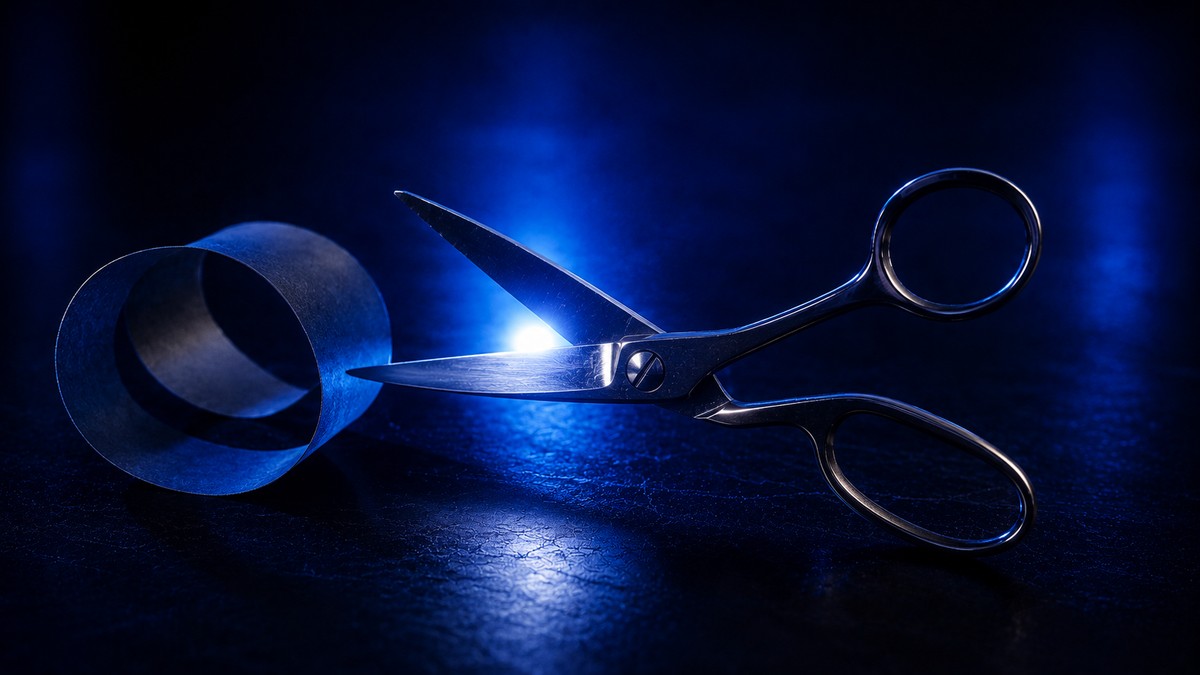
Picture someone editing a document decades ago, long before screens. They have a printed page in front of them, and a paragraph in the wrong spot. There is no keyboard shortcut to save them. So they do it the only way available. They take a pair of actual scissors, cut the paragraph right out of the page, and physically move it.
Then, to put it back down somewhere else, they reach for paste or glue and stick it into its new home. Cut with scissors. Paste with glue. The words describe exactly what the hands were doing, step by literal step. There was nothing figurative about it.
It was slow, messy, physical work. You were handling paper, blades, and adhesive to rearrange text that today you would move in a fraction of a second. Editing a long document meant a desk covered in cut strips and sticky fingers, carefully assembling the final version piece by piece.
Why the names survived the jump to screens
When early word processors arrived and let you move text around on a screen, the people building them faced a small but interesting choice. They needed names for these new commands, the ones that let you lift a chunk of text out and drop it somewhere else. They could have invented fresh technical terms. Instead, they reached for the language everyone already knew.
So they kept the old words. “Cut” and “paste” already lived in people’s heads from the physical version of the task, so borrowing them made the new digital tools instantly understandable. You did not have to learn a new concept. You already knew what cutting and pasting meant. The software just made it faster and cleaner and free of glue.
That is a quietly brilliant bit of design. Rather than forcing people to learn something unfamiliar, the early software leaned on a habit that was already deeply familiar. The metaphor did the teaching. Anyone who had ever rearranged a page with scissors understood the buttons on day one.
A little museum inside your keyboard
So here is the strange, delightful truth. Every single time you copy and paste, you are using language from an era of scissors, glue, and paper, not pixels. The words are a leftover from a workflow almost nobody performs anymore, preserved and carried forward into tools that work nothing like the originals.
The action has changed completely. There is no blade, no adhesive, no desk covered in paper scraps. But the vocabulary stayed frozen in place, a tiny fossil of physical editing tucked inside one of the most common things you do on a computer. You are quietly speaking the language of an old craft every time you rearrange a sentence.
We think about this a lot when we build custom apps. The best software often works precisely because it borrows something people already understand from the physical world, then quietly makes it a hundred times easier. A good metaphor can teach a new tool without a single line of instructions. The tech we build on is layered with these borrowed ideas, and “cut and paste” might be the most well-worn example of all, still doing its job long after the scissors were put away.
Prefer to watch?
Built by Buit builds practical apps and AI tools for businesses across South Florida. See what we make, or start a project.
Leave a Reply