Say the word Nintendo and your brain fills in the rest instantly. Mario, Zelda, the Switch, that little jingle when a console powers on. It feels like a company born from the video game era, native to screens and controllers.
Except Nintendo is over a hundred and thirty years old, and it started out making playing cards. That is not a typo, and it is not a stretch. Long before it made a single pixel, Nintendo was a card company, and it stayed that way for most of its life.
Founded in 1889, long before the console
Nintendo was founded in 1889. Let that date sink in for a second. This was decades before television, before electronic games, before most of the technology we associate with the brand had even been imagined.
Back then it did not make games at all, at least not the kind you plug in. A man named Fusajiro Yamauchi started the company to produce something entirely handmade and physical. The Nintendo of 1889 had more in common with a craft workshop than a tech company. There were no engineers, no code, no circuits. Just skilled hands and a product people wanted.
It is genuinely hard to line up the founding date with the modern company in your head. A business that began in the eighteen hundreds now sells you a game console you carry in your pocket. That is more than a century of reinvention.
The flower cards that started it all
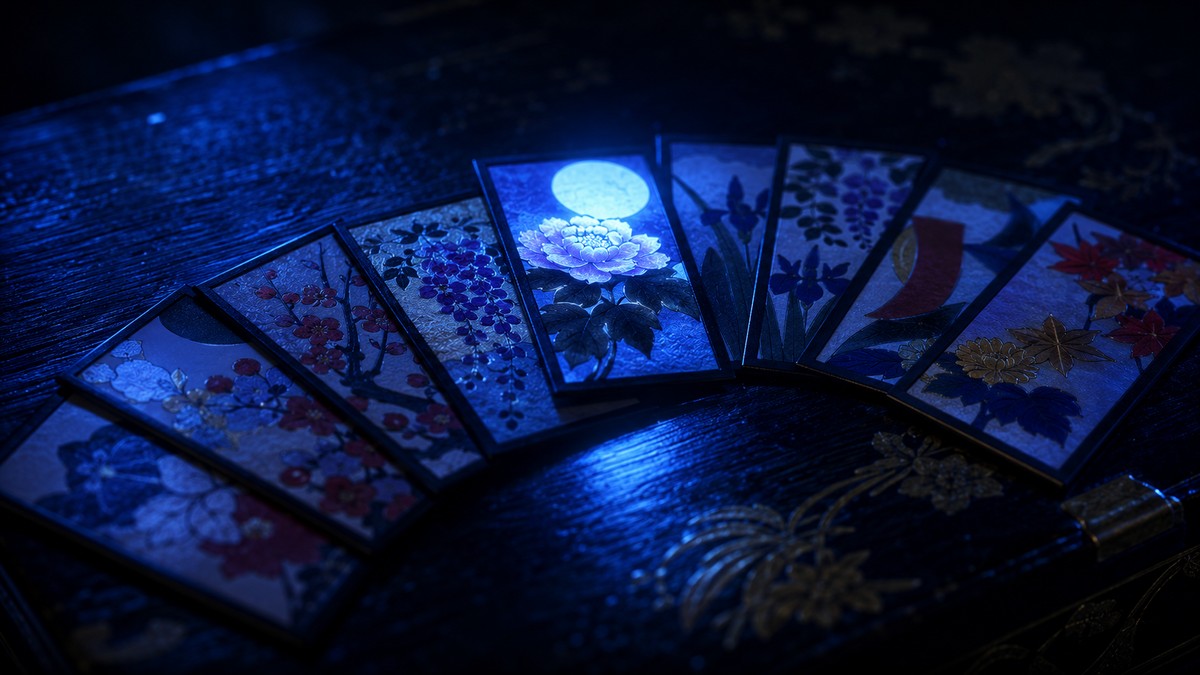
What Yamauchi set out to make was hanafuda, beautiful hand-crafted Japanese playing cards decorated with flowers. Not the standard suits you might picture. These are a distinctly Japanese design, and the details are lovely.
A hanafuda deck has forty-eight cards, split into the twelve months of the year, with each month represented by a flower or plant. It is a whole visual system, part game and part art, rooted deeply in Japanese tradition. Making these cards well took real craftsmanship, and that craft was the entire business.
For most of its history, Nintendo was a card company. Not a company that dabbled in cards on the side, but a card company, full stop. That was the identity for a very long stretch of its existence.
The wild part: it still makes them
Nintendo did not seriously get into electronic games until the 1970s. So there is this enormous span, roughly the first eighty years of the company, where the thing we now know it for did not exist as part of the business at all. The pivot to electronics is a relatively recent chapter in a very long story.
And here is the detail that ties the whole thing together in the best way. Nintendo still makes those flower cards today. The company that gives you cutting-edge consoles has never stopped producing the humble hanafuda decks it was founded on more than a century ago.
That is a rare kind of continuity. Most companies bury their origins the moment they outgrow them. Nintendo just kept the old craft alive alongside the new one, so its very first product and its latest console share the same shelf, made by the same company, generations apart.
The history behind what we build
At Built by Buit, we find this kind of story quietly inspiring, because it is a reminder that a company is not locked into whatever it makes today. Nintendo went from flower cards to game consoles without ever losing the thread, and that willingness to reinvent while respecting the roots is exactly the mindset good software work takes. When we take on custom app development, we are often helping a business make its own version of that leap.
So the next time you pick up a Nintendo console, remember it traces back to 1889, to flower cards, forty-eight of them split across twelve months, still made today. A company founded in the eighteen hundreds now hands you a game console. That is not a company that got lucky. That is a company that kept reinventing itself for over a century.
Prefer to watch?
Built by Buit builds practical apps and AI tools for businesses across South Florida. See what we make, or start a project.
Leave a Reply